The first ball you own changes bowling from something you do at birthday parties into something you actually do. It also comes with a decision that trips up almost every new bowler: how do you pick one that fits you instead of one that just looks good on the rack?
The short answer is that weight, grip, and fit matter far more than graphics, brand, or whatever the best bowler in your league throws. The better answer is that you can sort out all three in an afternoon, in a specific order, without spending a fortune.
Start With Weight, Not Color
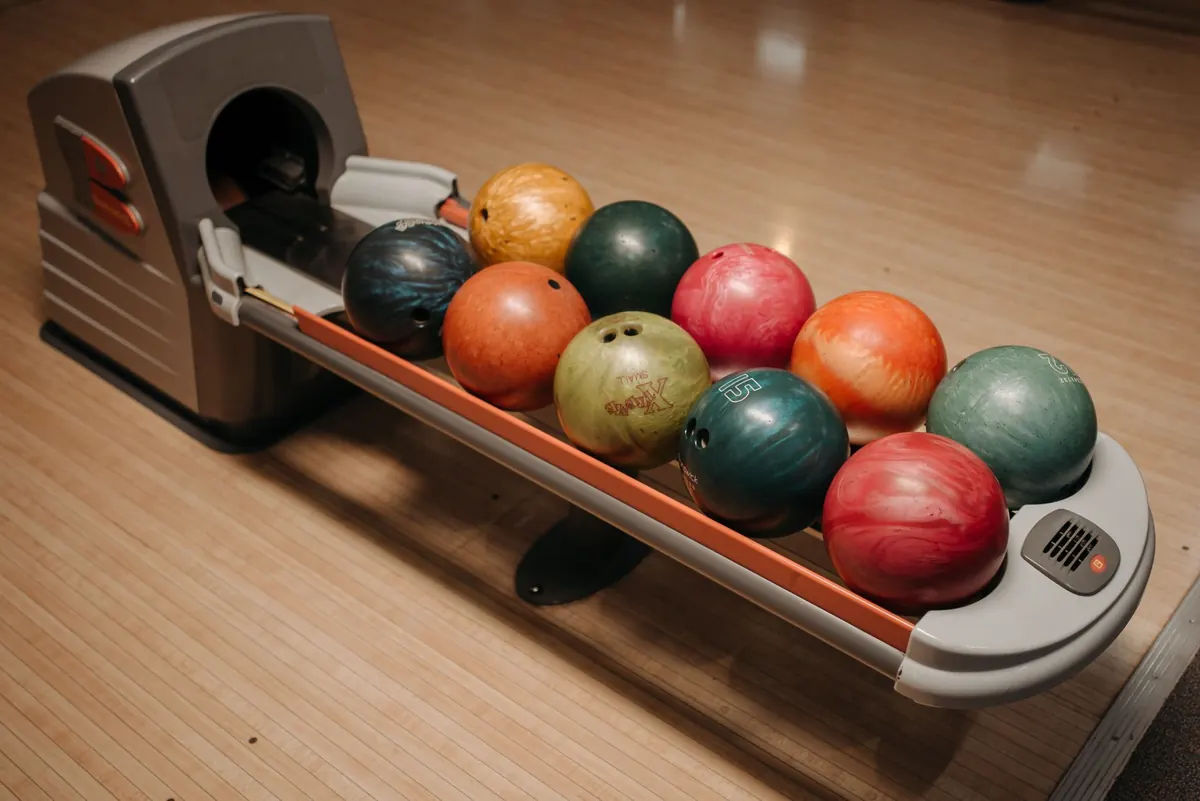
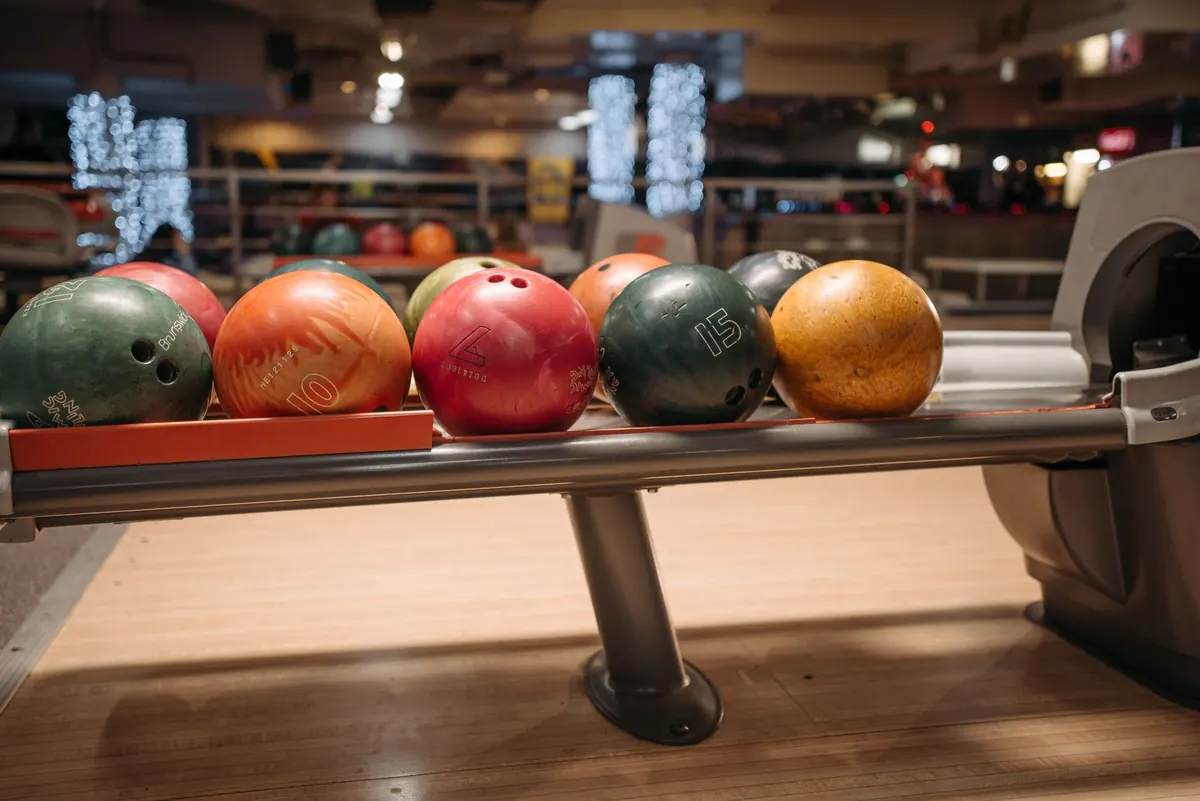
House racks usually skip sizes. You'll find a 10, a 12, a 14, and a 16, and the holes in all of them were drilled for somebody else. Most new bowlers either grab the heaviest ball they can lift off the rack or the lightest one they can find, and both choices cause problems.
A ball that's too heavy forces you to squeeze and muscle the swing. Your shoulder drops, your arm tires by the fifth frame, and your accuracy leaves with it. Too light is subtler and just as damaging: the ball skips through the pins instead of driving through them, so you start throwing harder to compensate, and throwing harder wrecks your timing.
A rough starting point many pro shops use is about 10 percent of your body weight, then adjusting up or down for strength, age, and any joint issues. Treat that as a starting point, not a rule. A strong 150-pound teenager can handle 14 comfortably. A 200-pound adult with a cranky shoulder may be much happier at 12.
If you have a wrist, elbow, or shoulder injury, or anything that affects your grip strength, talk to a doctor or physical therapist about what weight makes sense before you buy anything.
How to Test a Weight Without Guessing
You can do this on your next open-bowl session, and it costs nothing:
- Find house balls in three weights, typically two pounds apart.
- Throw five or six relaxed shots with each one. Not your hardest shots. Normal ones.
- Pay attention to where you feel strain: fingertips, thumb, wrist, forearm, shoulder.
- Play a full game with the weight you liked best, then a second, then a third.
The real test is the third game. The right weight feels roughly the same on frame 30 as it did on frame 1. If your arm is done by the seventh frame, drop two pounds. If you feel like you're pushing the ball down the lane rather than swinging it, go up two.
Fit Is the Part Nobody Warns You About
Weight gets all the attention, but fit is what separates a ball you can repeat shots with from one you fight all night. A properly fitted ball stays on your hand without you clamping down on it. When the fit is wrong, you squeeze, and squeezing kills your release, strains your wrist, and makes the ball come off your hand differently every time.
Three measurements do most of the work:
- Span: the distance between your thumb hole and finger holes. Too long and you can't get your thumb all the way in; too short and you're cramped and grabbing.
- Pitches: the angles at which the holes are drilled. These determine how your fingers and thumb sit in the ball and how cleanly you release it.
- Hole sizes: your thumb should slide out with almost no resistance, and your fingers should sit in grips that match their size and flexibility.
This is why a house ball can feel great on one lane and terrible on the next: you're not using the same one, and none of them were measured for your hand.
What a Fitting Appointment Actually Looks Like
Call a pro shop and ask for a fitting. You don't need to buy the ball there first, but it usually makes sense to, because many shops include the fitting with a ball purchase and charge a separate fee if you bring your own. Ask before you book.
The fitting itself is unrushed and a little old-fashioned. The driller will measure your span, check how your hand sits on a fitting ball, mark your thumb and finger positions, and ask you how it feels. You'll throw a few shots once the ball is drilled, and a good driller will adjust the thumb hole or add tape until the ball comes off your hand cleanly without you thinking about it.
Two things worth knowing going in. First, bring your own bowling shoes or plan to rent them, since your footwork affects how the ball comes off your hand. Second, don't buy a ball online before you've been measured. Buy the fit first. If you want to shop around afterward, you'll have your measurements on file and you can compare options with actual information.
When to Move On From House Balls
You don't have to outgrow the rack before you buy. You just need to notice that it's holding you back. Common signs:
- Your scores have flattened out even though your mechanics keep improving.
- You're adjusting your grip between frames, or shaking your hand out after every shot.
- Your thumb or wrist is sore the day after bowling.
- You can't find a consistent weight or hole size, so every session feels like a fresh start.
- You're trying to hook the ball and it slides straight because the house ball is plastic or worn slick.
For a first ball, don't chase the most aggressive thing on the wall. An entry-level reactive ball gives you enough hook to learn with without overreacting to every bit of oil. A plastic ball, meanwhile, is a fine choice if you're still throwing mostly straight, and it stays useful later as a spare ball. Either way, one ball drilled for you beats three balls drilled for nobody.
A Practical Order of Operations
If you want this done in a weekend, here's the sequence that works:
- Bowl two or three games with house balls in different weights and note which one you can still throw comfortably in the third game.
- Book a fitting at a pro shop. Bring the weight you settled on; the driller will confirm it.
- Decide on one ball, not an arsenal. Entry-level reactive or plastic, depending on whether you're hooking yet.
- Budget for the ball, drilling, and your own shoes. Rental shoes are the fastest way to make good footwork impossible.
- Bowl with it for a month before you buy anything else. Learn what the ball does on your lanes, and what you do with it.
Your first ball isn't a statement. It's a tool that finally matches your hand, and that alone will change how you bowl more than any upgrade you make in the next year.
Photo: Pavel Danilyuk / Pexels